Africa Oil: Invest In The 8th Largest Discovery Of The 21st Century

Summary

  • Africa Oil owns a 6% stake in the Venus discovery, the 8th largest discovery made in the 21st century.
  • TotalEnergies is the largest investor and operator of Venus.  Total calls Venus “Golden Block”. Total is spending 50% of its global exploration budget on Venus.
  • Retail investors speculated on Venus’s size disclosure during Total’s Capital Market Day through Africa Oil shares, causing a 30% drop in its share price. That made the opportunity more attractive.
  • The second Venus well results are expected to be published by the end of November. That should further certify Venus’s size and push the Africa Oil stock up.
Beautiful Dusk Sky Over an Offshore Oil Drilling close to Huntington Beach
Jeremy Poland

Introduction to Africa Oil

Africa Oil Corp (TSX:AOI:CA) (OTCPK:AOIFF) is an upstream oil corporation that was founded in 1988 and headquartered in Vancouver, Canada. Its core lies in exploration assets located in the nascent and under-explored terrains of West and East Africa.

Africa Oil is listed in Toronto (TOR: AOI) and Stockholm (STO: AOI). The market capitalization is CAD 1.2 billion (USD 850 million). The 2023 Revenues, EBITDA, and Net Profit are estimated at USD 300 million, USD 270 million, and USD 210 million, respectively. The company has a year-end 2023 projected Net Cash position of around USD 200 million.

Africa Oil’s strategic capital allocation and disciplined financial management have helped maintain a strong balance sheet, enabling it to weather the volatile phases of the oil industry.

Africa Oil owns two operating assets, two major oil discoveries, and several prospective resources:

Operating Assets

Africa Oil owns 3 of the top 5 oil-producing fields in West Africa through its 50% stake in Prime:

  • Agbami field (OML 127) is operated by Chevron (CVX), and Africa Oil owns an indirect 4% stake.
  • Egina, Akpo (OML 130) is operated by TotalEnergies (TTE), and Africa Oil owns an indirect 8% stake.

Both production assets are in Nigeria. The company has a long-lived production base of 20,000 bbl/day net to AOI with very low operating costs of around USD8/bbl.

The three producing assets generated Net Revenues to AOI of USD 138 million and USD 300 million in 2022 and projected 2023. respectively.

Prime Track Record

The three West African oil-producing wells illustrate greatly AOI capabilities:

  • AOI bought a 50% stake in Prime in January 2020 for USD 520 million.
  • In three years, AOI collected USD 713 million in dividends from Prime.
  • If oil would remain at USD 70 per bbl, AOI should receive at least USD 150 million in dividends from Prime over the next three years. With oil at current prices, the annual dividend would be significantly higher.

I believe it could be a great investment with strong cash flows coming for the years to come.

Discoveries – Venus of the Century

Africa Oil holds a 6.2% indirect stake in the Venus discovery offshore Namibia through its 31% stake in Impact Oil and Gas. The operator of the discovery is Total, which owns a 40% stake (other owners are Qatar (30%), Impact (20%), and Namcor (10%)). Total has mooted Venus as a “Golden Block” and will spend this year more than 50% of its global exploration budget to apprise Venus. Venus is very material for Total and even more material for AOI. The Financial Times reported Venus as the eighth-largest discovery in this century, bigger than Johan Sverdrup, Europe’s largest producing field.

Ft.com
FT article (ft.com)

The other important discovery in the AOI Portfolio is Preowei, which is part of OML130 that AOI owns indirectly through Prime. Preowei deposit may increase production of the OML130 by 50%, which is material for AOI. Just for comparison, AOI’s stake in Venus may contain at least 25 times more oil than AOI’s stake in Preowei.

Significant Development and Exploration Upside

Africa Oil has an additional portfolio of development and exploration assets, split between direct interests and indirect interests through its portfolio companies. The slide below summarizes the opportunities.

ft.com
ft.com (ft.com)

Another material asset that could drive the share price is Block 11B/12B. AOI owns an indirect 3% stake (through its 30% stake in Africa Energy) in the block, which is also operated by TotalEnergies. Total has applied for a production license that should be issued early next year. Total is also negotiating an off-take agreement with the nearby power plant owned by Eskom. Achieving those targets should drive the AOI stake in Africa Energy materially higher.

Production assets and Venus represent most of the value of Africa Energy. In the next few weeks, the AOI share price will likely be mainly driven by the Venus news flow.

The Opportunity – Share Price Down on Speculation by Retail Investors

  • During 2023, Total hyped Venus. Total used very strong statements on Venus’s size. See the FT article for an illustration.
  • The market expected that Total would use its well-advertised Capital Markets Day on 27 September to provide details on Venus’s size. Many retail investors speculated on this through shares of AOI.
  • The speculation did not work out. Total did not publish any material update on the Venus size on Capital Markets Day.
  • Total only stated that Venus will proceed to commercialization, and the deposit estimate size is at least 1-2 billion barrels. They also announced that Nara, an adjacent plot to Venus, showed a non-commercial deposit of oil.
  • Total communication drove AOI share price down by 30%.
  • This creates the opportunity – the stock was pushed down while strong catalysts on Venus are due by the end of November.
  • Total is drilling a second well in Venus. The flow data that should reconfirm the Venus size should be published by the end of November. That should re-rate the AOI share price in my view.

Total’s Capital Markets Day Drove AOI 30% down and made AOI the worst-performing Scandi Oil stock.

Sparebank
sparebank (Sparebank)

Source: Sparebank Research

Why did Total not Publish the Data?

  • I believe Total’s cheering up the deposit in the press was unusual. Conventional practice is to limit disclosure for deposits set for production in about five years.
  • There are speculations suggesting that Impact Oil may sell its 20% stake in Venus. AOI holds a 31% stake in Impact Oil.
  • Total might be an interested party to buy Impact’s stake in Venus.
  • If they would not buy, they would at least prefer to have a say in who the buyer is in my opinion. Total has, therefore, a low incentive to help prospective buyers be attracted by robust flow data.
  • Qatar could be an ideal buyer; they are a strategic long-term player. They may be less price-driven. Qatar is mainly working with Total – they are together in Namibia, South Africa, and Guyana.

Venus Massive Field’s Potential

  • Total declared Venus will be developed.
  • Total’s conservative estimate places Venus at 1-2 billion barrels. That is a very conservative assessment, according to AOI.
  • Wood Mackenzie’s report from 3rd October 2023 highlights Venus with a potential of 4.4 billion barrels boe (3 billion oil + 1.4 billion gas), assuming a conservative 30% oil recovery.
  • The flow data disclosed by the end of November should help to fine-tune the size of the deposits. It will be the major catalyst for the stock.

Further Upside in Adjacent Fields to Venus:

  • Nara: Found to contain oil, though not at commercial levels. Total contemplates further drilling in the Nara block. Nara still has a promising potential.
  • Mangetti: Situated above Venus, current drilling results are expected by February 2024.
  • Damara and South Damara show encouraging seismic results, with drilling planned for 2024.
africaenergy.com
africaenergy.com (africaenergy.com)

Valuation – Venus and other discoveries are given no value by the market

The recent sell-off brought the current AOI share price to 21 SEK (2.71 CAD). I looked at how Scandinavian broker houses value AOI´s two oil-producing assets:

  • SpareBank Research values AOI´s two oil-producing assets at 19 SEK
  • Pareto Securities values AOI´s  two oil-producing assets at 17 SEK (assuming USD 70 per bbl, every USD 10 increase in assumed oil price would add 20% to the valuation)
  • Arctic Securities values the two oil-producing assets at SEK 22 SEK.

In summary, after the sell-off, the AOI is valued approximately at the valuation of its oil-producing assets. All discoveries and all prospective assets are, at the moment, not reflected in Africa Oil’s share price.

Venus, which FT calls the 8th largest discovery of this century and which Total calls a “Golden Block”, is not reflected in the Africa Oil share price at all.

The Venus valuation is hard to assess. The valuation is driven by Venus Recoverable volumes and assumed oil price.

To give an indication, Arctic Securities produced a valuation matrix with the above two variables. For example, at Venus’ size of 3 bln barrels and with an assumed oil price of USD 80 per barrel, the AOI’s stake in Venus would be valued at USD 800 million. That is well above the current AOI’s enterprise value of USD 650 million.

Catalysts

  • Venus’s results will drive the AOI’s share price in the near term.
  • The second well results, expected by the end of November, might spark a material share price rebound.
  • The major catalyst would be the sale of an AOI stake in Venus to Qatar or a similar investor. The transaction value is hard to assess but could easily beat the whole AOI Enterprise value in my view.
  • Africa Oil has a 30% stake in Africa Energy, which is the owner of a 10% stake in Block 11B/12B, a major gas liquids deposit in South Africa. Rumors suggest the operator Total is close to sealing an off-take agreement with Eskom.

Conclusion

Africa oil is down 30% in the last few weeks. In the short term, the share price will most likely be driven by Venus’s news flow. The second well results from Venus should be available by the end of November and should re-rate the stock.

The potential sale of AOI’s stake in Venus would be game-changing for Africa Energy and its shareholders.

Total is spending 50% of its exploration budget this year on Venus. I think Total believes in Venus. Investors should at least study the opportunity.

Editor’s Note: This article discusses one or more securities that do not trade on a major U.S. exchange. Please be aware of the risks associated with these stocks.

Enter your email address to subscribe to this blog and receive notifications of new posts by email.

Disclosure: 

The goal of the blog is to provide investment ideas for further research. I/we have a beneficial position in the shares discussed above either through stock ownership, options, or other derivatives. I wrote this article myself, and it expresses my own opinions. I am not receiving compensation for it. I have no business relationship with any company whose stock is mentioned in this article. The article does not represent investment advice. Please do your own research before making any investment action.

Energy Recovery: Most Important Takeaways From The Q3 Call


Summary

  • Energy Recovery (ERII) dominates the global industrial desalination industry, having a 90% global market share.
  • ERII is now trying to copy its technology into a new global segment – industrial air-conditioning and refrigeration.
  • Due to Kigali protocol, all greenhouse gas industrial air-conditioning and refrigeration systems need to be replaced with CO2 systems.
  • Energy Recovery devices can save up to 40% of energy in the new CO2 devices. ERII has a 25-year track record and no major competition.
  • Below is a summary of the Q3 call that goes into detail about the CO2 opportunity.
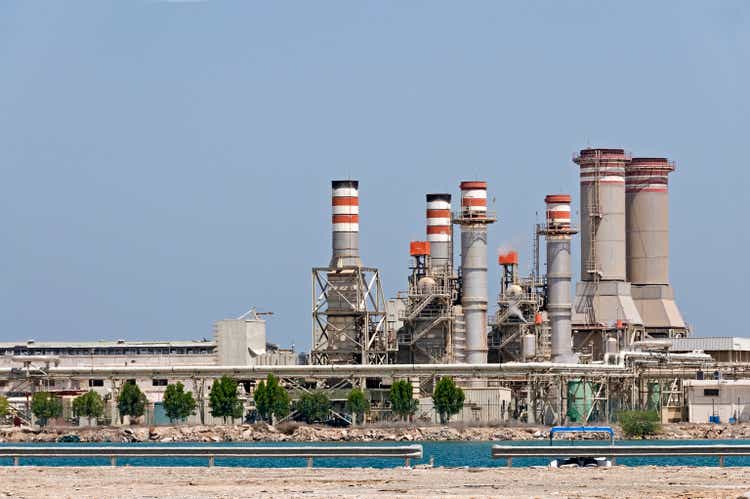
Desalination Plant

Nirian/iStock via Getty Images

Introduction to Energy Recovery

Energy Recovery (NASDAQ:ERII) is a US-based $1 billion market cap company. It has zero debt, $100 million in cash, 72% margins, and 20% revenue CAGR. Energy Recovery is one of the few renewable companies that is growing strongly and generating cash profits.

ERII invented and dominates PressureExchanger technology (“PX”) that allows recycling of up to 40% expended energy in virtually any high-pressure and hydraulic process. Large-scale reverse osmosis desalination plants would not be possible without its pressure exchangers, and as a result, ERII has a 100% market share in desalination PX coupled with 70% margins. Demand for freshwater is projected to grow substantially as entire regions of the world face acute water shortages.

After dominating desalination for more than 30 years, ERII started penetrating new industries. The first successful project was PX for wastewater plants. In Q3 waste water revenues doubled vs last year. The company forecasts doubling wastewater revenues again next year.

The latest vertical for the PX technology is industrial refrigeration and air conditioning. Most systems globally run on greenhouse gases. Based on Kigali protocol, most countries have committed to limiting the use of greenhouse gases (HFC) by 80% by the mid-2030s. It means that all industrial refrigeration and air conditioning systems should be replaced with CO2 systems. CO2 systems need to run at higher pressures than HFC systems – therefore, they consume more energy. ERII´s PX system can save up to 40% of energy costs. ERII has no material competition. There is around 500,000 such industrial systems in the world. The market is considerably bigger than its core desalination. The upside is very material.

Why is ERII down 45% since August?

The last two months have been difficult for ERII shareholders. The stock peaked in early August at close to USD 31. The decline started following the Q2 earnings call and the stock bottomed at USD 14 just before the Q3 earnings call.

The graph below is a good explanation – it shows ERII vs iShares Global Clean Energy. It just shows that the last two months were difficult for the sector. ERII was dragged down with the other renewables.

There was one other factor – ERII stock had been on a very good ride. Since mid-2020, the stock went from USD 7 to USD 31. A lot of investors made big paper gains. When the renewables selloff started, people tended to first sell the assets where they had big unrealised profits. That may have been ERII for many and that may have contributed to the heavy ERII selling.

interactive brokers

interactive brokers (interactive brokers)

The Q3 call update

Energy Recovery hosted its Q3 call. The market has been concerned about CEO Bob Mao’s resignation and his replacement. Mao had done a great job at ERII, and after the announcement, the share price dropped sharply.

The interim CEO has very strong credentials. I selected a few of his quotes from the Q3 call transcript, where he introduced himself. He seems like the right person for the state ERII is now in.

David Moon – Interim President & Chief Executive Officer on his background:

I spent almost three decades in the cooling and heat industry in the U.S., Europe, Asia and Australia, most recently with Carrier.

I understand what it takes to commercialise and introduce a highly engineered product into a mature market and, more importantly, how to penetrate that market. This is what Energy Recovery did in desal and Wastewater. It is now what we will do in refrigeration.

I’m excited to contribute to our CO2 journey …

The major concern of the market has been the slow introduction of PX technology in industrial Refrigeration and air conditioning. Moon talked at length about the product and introduction in Europe and the US. His summary was the most comprehensive description of the situation we have heard from the company. I have included below his most interesting quotes from the transcript:

David Moon -Interim president and CEO on CO2 product lunch progress:

We have … established strong relationships with major OEMs in Europe and the US; executed installations with great OEM and grocery partners on both continents; and we’ve won two industry awards, the latest being the RAC Innovation of the Year award together with our good partner Epta Group in September of this year.

One key player in this industry recently said you are everywhere, and everyone is talking about you.

The US and European markets are in very different phases of the transition from HFCs.

In the US, we have a market that is just getting started. The US has only roughly 1,500 CO2-based refrigeration systems as of 2023 and is expected to increase this number to over 5,000 by 2027.

The US market is also simpler than its European counterpart. It is largely served by only a small number of large OEMs and contractors, which simplifies our distribution channels.

In North America, we will soon be commissioning our second installation with Vallarta in California, and we are in discussions for multiple deployments with them in 2024. We should commission our initial PX G with our first Canadian supermarket partner, a chain with over 1,000 locations, in the fourth quarter of this year.

The European market provides us with a strong understanding of how the US market is likely to evolve… the transition to natural refrigerants in the European market is more advanced, with over 60,000 CO2 installations already in place throughout the continent and north of 10,000 installations occurring annually in recent years.

Thus, we have a large established potential brownfield market in Europe and a strong annual base of greenfield installations that we can tackle.

Ultimately, this (brownfield) should be a low-hanging growth opportunity if correctly approached.

In Europe, our partner in the Benelux region, Fieuw Koeltechnik, is planning three more installations in Q4, including two at Delhaize, a large European and US chain with over 800 locations, as well as at a pancake factory in Belgium, which we had previously announced. Fieuw is also in discussions with the large European chain, Carrefour on our first repeat installation with them. And finally, we are working actively on our second deployment with Epta Group for a supermarket chain of over 2,000 locations. And, of course, we are in conversations with other large chains throughout the continent. From my perspective, this is impressive progress for a new technology in this industry.

However, what I can say is … at least 50 installations next year with the premier retailers in Europe and US and it’s just a jumping off point into 2025 and 2026.

The last point is the most important in our view. “At least 50 installations next year” is a very material start. Many of those will be in large global supermarket chains. Once tested there, the growth could be very exponential.

The CO2 guidance shows that ERII has gained the confidence of the major OEMs that will start implementing its technology. If this materializes, it would be very bullish for the company and its investors. I believe that the +20% share price reaction was influenced by the bullish CO2 guidance.

Financial Guidance

The company delivered a very strong Q3, the strongest Q3 in its history. The 20% jump in the share price must have also been influenced by the strong financial results and longer-term guidance. I summarise the most important highlights from the guidance:

Joshua Ballard – Chief Financial Officer:

We had a great third quarter, beating expectations across the board. We achieved $37 million in revenue, exceeding the upper end of our guidance by almost 6% with a nearly 70% gross margin and over 32% adjusted EBITDA margin.

Specifically, in Desalination, sales increased by over $15 million compared to the previous quarter, while our Wastewater sales more than doubled.

.. CO2 led to $100,000 in third-quarter revenue..

For fiscal year 2023, we now expect to land in the mid-range of our $131 million to $138 million overall revenue guidance, with roughly $7 million of that coming from Wastewater and the balance from Desalination.

We anticipate concluding the year with a cash and investment balance ranging between $110 million to $120 million.

As of today, we already have a line of sight to roughly 80% of our $200 million desalination target for 2026.

In Wastewater …. we can achieve at least the lower end of our $30-70 million target for 2026.

For 2024 …. we are now seeing some projects being delayed … we now expect modest revenue growth for Desalination in the range of $128 to $135 million, implying flat desalination revenue to 5%

Our wastewater business continues to show real strength, and we are guiding $12 million to $15 million in revenue in 2024

In CO2 in 2024…being in 50 locations, while it’s a considerable step forward in building that foundation for growth. From an actual revenue perspective, we’re not talking about huge dollars..

Overall, we expect to achieve $140 million to $150 million in Water revenue next year.

The guidance was very bullish. Based on the presented guidance, Q4 should be the best Q4 quarter ever. Ballard confirmed that even if some projects would be delayed:

Q4 would still be an outstanding quarter. Absolutely, from a profit and a revenue perspective, no doubt.

Conclusion

This is the most detailed take on the CO2 opportunity from the company to date. The industrial refrigeration and air-conditioning market, due to the Kigali protocol-driven change, is many times bigger than the water business. Installing at “least 50 locations” in prime supermarket chains next year is an encouraging indication that the opportunity is materializing. Once the technology is tested by the supermarket chains, the adoption could be exponential. In such case, so would be the revenues, profits and the share price.

Enter your email address to subscribe to this blog and receive notifications of new posts by email.


Disclosure: 
The goal of the blog is to provide investment ideas for further research. I/we have a beneficial position in the shares discussed above either through stock ownership, options, or other derivatives. I wrote this article myself, and it expresses my own opinions. I am not receiving compensation for it. I have no business relationship with any company whose stock is mentioned in this article. The article does not represent investment advice. Please do your own research before making any investment action.


Carnegie on Calliditas – US and China Approvals due in Q4.

Calliditas Therapeutics has been selling in the US since 1Q22 based on FDA preliminary approval. Its annualised sales reached USD 100 million. Not bad product lunch. We are long Calliditas. The below well summarises the investment rationale and the strong catalysts we could expect in 4Q23. The Q4 should be very good vs slow first three quarters of the year.

Calliditas has a leading drug in fight against IgA nephropathy. IgA nephropathy is a chronic kidney disease. Blood in the urine is one of the most common symptoms. It progresses over 10 to 20 years, and can lead to end-stage renal disease. It is caused by deposits of the protein immunoglobulin A (IgA) inside kidney.

Consensus expects slow growth of Tarpeyo due to seasonally slow Q3
Carnegie expect Tarpeyo sales to grow 15% Q/Q to USD28m in a seasonally slow Q3 and annual 2023 Tarpeyo sales forecast to USD101m. Better than consensus Q3 results should help the stock to rerate. The company is reporting on 16.11.23

Strong catalysts in 4Q23

The next key catalysts for the Calliditas stock will be:

  • Approval of Tarpeyo/Nefecon in China H2(23e) – while in the west IgA nephropathy is a reare disease, in China it is a very common illness. When we spoke to the CEO last, she expressed high hopes for the China market opportunity.
  • Full US approval and potential label expansion of Tarpeyo around YE(23), – Calliditas is already selling in the US since 1Q22, the full US approval will allow the company to materially extend its marketing efforts which should result in acceleration of sales growth in the coming quarters.

Competition has suffered setbacks, which could benefit Tarpeyo
Tarpeyo should benefit from competitors failures:

  • In September, Travere announced disappointing top-line results from its two-year confirmatory Phase III study.
  • In October, Omeros announced that its Phase III study with narsoplimab in IgAN did not reach statistical significance versus placebo on the primary interim endpoint

Carnegie sees Calliditas as attractive risk/reward opportunity
“Based on our estimates, the stock trades at an adj. P/E(25e) of 6x, which we find attractive, even considering that estimate risk remains relatively high.”

“Tarpeyo was launched in the US for IgAN in Q1(22) and sales in Q2(23) were at a USD100m annualised run-rate, which is not a bad launch, although
uptake has been below market and company expectations.”

Our take

We believe that the two catalysts (US and China approvals) both expected in 4Q23 have potential for material stock re-rating in the coming months. We are bullish on Calliditas

Enter your email address to subscribe to this blog and receive notifications of new posts by email.

Disclosure: 

The goal of the blog is to provide investment ideas for further research. I/we have a beneficial position in the shares discussed above either through stock ownership, options, or other derivatives. I wrote this article myself, and it expresses my own opinions. I am not receiving compensation for it. I have no business relationship with any company whose stock is mentioned in this article. The article does not represent investment advice. Please do your own research before making any investment action.

Fearnley and Arctic bullish on Havila Kystruten

Havila Kystruten – Potential multibagger on tourism in Norway. Fearnley and Arctic both published a bullish reports this week with price target of 1.8/1.73 NOK. Both talk about material upside above the current price target with short term triggers to achieve those:

  • HKY offers exposure to the high growth tourism segment in Norway, with strong underlying asset values and sensitive equity triggers.
  • The company is one of two operators on the scenic coastal route in West Norway, with four of the most environmentally friendly cruise ships in the world.
  • The routes are regulated by government concessions with contracts running to 2030 and NOK 103m in annual payment per vessel from the Norwegian government.
  • Tourism in Norway is experiencing high growth – The number of port calls Jan-Aug this year is on par with FY22 and above pre-COVID levels.
  • HKY is likely to refinance parts of its high interest cost over the coming 12 months, which we expect will increase free cash flow by NOK 59m annually and serve as a significant trigger to the equity story.
  • The fleet of cruise ships offer strong downside protection in replacement cost of NOK 3.0/share and broker quotes on the fleet of NOK 2.5/share.


Arctic Securities Summary:

IoC: Every storm runs out of rain

After several challenging years due to factors out of management’s control, the refinancing this summer enabled the company to take delivery of the final 2x vessels in August while also ensuring a sufficient liquidity buffer. HKY now has four state-of-the-art vessels on a contract with the Norwegian government running through 2030. On our figures, the company should be able to ramp up utilization without any further equity injections. Once the leverage ratios start dropping to more comfortable levels, a refinancing will be the clear catalyst for a re-rating of the stock. We initiate coverage with a Buy recommendation and a TP of NOK 1.73

Pareto Energy Conference – The Most Interesting Presentations

This week Pareto Securities hosted its 30th annual Energy Conference in Oslo with a record-high 2,000 participants, ~160 companies, and 1,300 investor meetings. I list below presentations that we found interesting.

Golar LNG

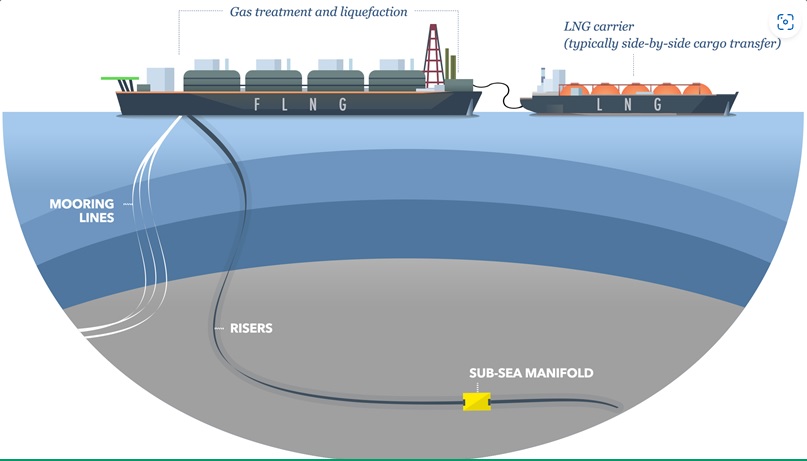
  • Golar LNG designs, convert, owns, and operates marine infrastructure that turns natural gas into LNG. Golar is the global leader in its field.
  • In the short term, the company should re-rate with the delivery of the second FLNG vessel, which is scheduled to be delivered in September, and in 1Q24, it should start its 20-year contract with BP.
  • The market pricing indicates that this may not be fully reflected in the share price. The 2024 revenues and profits should double by the delivery of the vessel. Historically, GLNG was trading around 8-10 times EV/EBITDA. It trades around 8 now on 2023 projections and around 5 on 2024 projections. It indicates that 2024 is not fully reflected in the share price.
  • The short-term trading opportunity is supported by the 150 million USD buyback and by the fact the company just announced its first dividends in 5 years. The yield is 5% now, and the dividend size may increase with the increased profits next year due with the operation of the second FLNG.
  • GLNG is a long-term attractive play as well. Due to the Russian war, Europe is now dependent on LNG. That dependence will drive demand for FLNG. Golar is planning to add more ships. It already bought one vessel for conversion, and two other projects are assumed by the brokers.
  • The second ship delivered this year is not in the price, and the additional vessels are not priced at all. Golar is the global leader in FLNG and should be the beneficiary of the LNG demand.

The most interesting aspect of the GLNG presentation was that the current FLNG is running only at 58% capacity while the new FLNG that should be delivered any moment to Golar is contracted at 90% capacity from 1Q24. It means that the revenue and profits jump might be even higher than anticipated.

Golar presentation:

https://ml-eu.globenewswire.com/Resource/Download/a1c9ab6c-6a6b-429e-a487-3c115b1b3de0

Mintra

I wrote here about Mintra several times. It is an innovative company that is focused on providing elearning courses for shipping and energy companies. Mintra generates strong cashflows and is very cheap on all metrics. The two largest shareholders will most likely take the company private. On Friday, 22/9 the largest shareholder Tjaldur, announced that it has acquired another 8.34% stake in the company. After this, the two largest shareholders own almost 60% stake in Mintra. It is only a question of time before Mintra goes private. The normal private premiums range a 50-100%. See my older posts for details.

Mintra Presentation:

Pyrum Innovations

Pyrum is a German company that recycles end-of-life tires to valuable end-products; thermolysis oil, recovered carbon black and thermolysis gas.

The company operates one of the most advanced tire recycling plants in Europe, located in Dillingen, Germany. The plant has been running commercially since May 2020, delivering oil to its offtake-partner and investor, BASF. 

This year Pyrum is commissioning its second plant in Dillingen. It is expected that the plant will deliver first oil during Q3 2023.

Pyrum has a pipelne of new plants to be build around Europe. By the end of decade Pyrum should have more than 10 plants operating around Europe. We are bullish on Pyrum becoming the European tire recycling leader.

Pyrum presentation

Africa Oil

Africa Oil Corp – market cap of ~ USD 1bn, based in Canada, delves into oil and gas exploration and production in several regions, including Guyana, Namibia, Nigeria, South Africa, and the AGC – the Senegal Guinea Bissau Joint Development Zone.

The major near term catalyst is the market update on its Venus discovery. Venus is rummored to be the top five discovery of this century. AOC owns 6% stake in Venus. Total, the majority owner has a capital markets day at the end of this week, where it is expected to announce details of the Venus discovery. The details could have a material impact on AOC share price.

Africa Oil presentation

Hafnia

Hafnia is our to pick in product tankers. Thesis is simple. The Russian war resuls in products, are being transported from multiple times longer distances than they were before the war. This is very bullish for product tankers. Recent ban by Russia on exports of diesel is further bullish for product tankers.

Hafnia presentation

Disclosure:

The goal of the blog is to provide investment ideas for further research. I/we have a beneficial position in the shares discussed above either through stock ownership, options, or other derivatives. I wrote this article myself, and it expresses my own opinions. I am not receiving compensation for it. I have no business relationship with any company whose stock is mentioned in this article. The article does not represent investment advice. Please do your own research before making any investment action.

Enter your email address to subscribe to this blog and receive notifications of new posts by email.

Biovica Reaches Signifciant Milestone – First Hospital Chain Signed

REDEYE RESEARCH NOTE:

Biovica: Secures the first larger direct commercial hospital agreement

Biovica has signed the first direct commercial client bill agreement with a larger healthcare provider operating more than 30 hospital laboratories, primarily located in Arizona. This is positive as it opens up for commercial and clinical DiviTum sales towards the end of this calendar year. This agreement is also based on a similar premium price as the earlier US provider network contracts introducing DiviTum to the private insurance segment. Biovica has an ambition to secure up to ten of these direct contracts by the end of April 2024. 

Johan Unnerus

The earlier commercial agreements with network providers placed DiviTum as an option for several private insurance networks. This latest direct commercial agreement sets DiviTum as a clinical option in more than 30 hospital laboratories, mainly in Arizona. In our view, this is a more extensive network as it involves more than 30 hospital labs, and we would expect that Arizona has some 175-200 hospital labs based on population (pro-rata).

As a result of this contract, these hospitals and hospital labs could start using DiviTum after a shorter run-in period, possibly over some 4-8 weeks. Biovica referred to a pipeline of additional direct contracts that the calendar year-end could conclude. By securing this contract, Biovica has delivered on the ambition to complete the first direct contract by Biovica’s Q2 (ending in late October).

This important milestone is also welcome as Biovica assesses alternatives to secure growth capital driving the US launch, which is necessary over the next six months. During the last call, Biovica also confirmed that it is considering different alternatives besides a traditional equity dilutive alternative. The next value trigger is the publication of the PLA code, the following direct contract and the establishment of an individual price for DiviTum by the US CMS. Our Base Case is SEK 27 (Bull SEK 60 and Bear SEK 5).

Biovica presentations:

https://biovica.com/investor-relations/events/

Disclosure:

The goal of the blog is to provide investment ideas for further research. I/we have a beneficial position in the shares discussed above either through stock ownership, options, or other derivatives. I wrote this article myself, and it expresses my own opinions. I am not receiving compensation for it. I have no business relationship with any company whose stock is mentioned in this article. The article does not represent investment advice. Please do your own research before making any investment action.

Enter your email address to subscribe to this blog and receive notifications of new posts by email.

SeekingAlpha: Vicore Pharma is Leading the Race in IPF Cure

SeekingAlpha.com is the largest investment idea site in the world. On Friday they published an article on Vicore Pharma. As the artcle is behind paywall, below is the full version.

In Therapeutics Space, I Prefer Vicore Pharma Over Pliant Therapeutics

  • Pliant Therapeutics might face a termination of its IPF program. Vicore Pharma may be the first pharma company that may turn Idiopathic Pulmonary Fibrosis (IPF) into a curable disease.
  • Vicore´s peers, like Pliant, are trading at USD billion dollar valuations while having significantly worse study results.
  • Vicore is backed by the most reputable US pharma specialist investors, such as Orbimed and Suvrett, or top Swiss healthcare fund HBM.
  • Vicore is making great progress on all fronts.
  • If Vicore were US-listed, it would be a multi-billion dollar company. Vicore is now, therefore, a multi-billion dollar company in the making.
Molecular Structure - Lights Concept
BlackJack3D

In April 2023, I wrote a SeekingAlpha article titled: Pliant Therapeutics: Bad Risk Reward, Buy Vicore Pharma Instead. In the article, I introduce Vicore Pharma (STO:VICO) and compare it to the US-listed 1.0 billion USD company Pliant Therapeutics (NASDAQ:PLRX). The article’s point was that the US-listed Pliant was 12 times more expensive than Sweden-listed Vicore while having materially worse results. In fact, Vicore has the best results of any company in Idiopathic Pulmonary Fibrosis [IPF]. In the article, I also provided a valuation of Vicore and compared it to the valuation of Pliant.

In early September, Pareto Securities published a report on Vicore and the analyst Dan Akschuti, one of the best pharma analysts in Scandinavia. Did an interview where he summarized its findings. Dan is very bullish on Vicore. In this article, I review the progress Pliant and Vicore have achieved.

Pliant Therapeutics progress

In May, Pliant released its 24-week phase 2a data, which showed a negative change in lung capacity. Pliant positioned its results as positive. The report was surprising:

  1. Pliant reported only 320mg group results. It did not present the previously presented 40 mg, 80mg, and 160mg groups. In my first article, I pointed to a quote from Pliant CEO from 2022, Life Science Leader magazine: “Be strategic when disclosing data.” It was a surprising quote from a pharma CEO. This readout indicated that Pliant may still be adhering to the strategy.
  2. The results of the 320mg after four weeks were in line with placebo.

In summary, the report indicated that its drug only works for the first four weeks. After that, the patient’s lung capacity declined in line with placebo. Pareto’s view was that Pliant is unlikely to complete the study. 

In my first article, I recommended short, Pliant through options. That strategy has been working. At the time of my SA article publication, Pliant share price was USD30.23. The last closing price of Pliant was USD16.46, down 45% from the publication.

Will Pliant join the failed IPF drug list?

Several trials have been discontinued this year in IPF. Roche (OTCQX:RHHBY) terminated all Promeditor programs, FibroGen (FGEN) also announced its phase 3 trial in IPF failed, and Galecto (GLTO) also filed with their IPF drug. In the next 12 months, we should see whether Plaint will also join the long list of failed drugs.

Vicore’s drug remains the only one to demonstrate that a high proportion of patients achieve stabilization and improvements in lung capacity.

Why is Vicore so Unique?

Vicore is one of the companies searching for the cure of now deadly Idiopathic Pulmonary Fibrosis (IPF). There is no cure for IPF now. There are medications that can slow down the disease. Such medications were sold for material valuations. 

In May, Vicore published the latest interim data of the 36-week phase 2a trial. The results were unprecedented. Up to now, no other company in this field is showing such results. Further, Vicore is the only drug that activates a healing mechanism of the lung. It is the first drug that has the potential to make an IPF a curable disease. The results were almost too good to be true.

Pareto Securities, in their research, states:

“We found no confounding factors, the data is as robust as it getsfor a phase 2a trial”

There are drugs on the market, but they only slow the disease. Vicore’s ability to cure the IPF would be a significant competitive advantage. Multiple companies are trying to develop new IPF drugs. Until now, Vicore is leading in the race to cure the IPF.

Strong backing for Vicore by US specialists investors

In June 2023, Vicore raised 500 million SEK (about USD50 million) from top US specialist investors such as Orbimed and Suvrett, while top Swiss healthcare fund HBM substantially increased its position. Backing from the most reputable investors in the field is a strong confirmation of the investment case.

Price Target for Vicore

In my article, I argued that the Vicore valuation should be multiple times higher than it is today. I projected at least 100% in the next 12 months.

Pareto Analysts as highlighted in the interview has three price targets:

  • The 12-month price target of 97 SEK vs. the current share price of 15 SEK.
  • The “fair value” of the stock is estimated at 184 SEK, assuming a 55% likelihood of approval (increased by 9% in the report).
  • The “total upside” is assessed as 372 SEK per share, estimated for 2027. The total upside represents 25x the current share price.

That “total upside” valuation above is still just ~60% of what Roche paid for InterMune (USD 8.3 bn). The transaction took place after the approval for Europe and Canada, the US approval was pending.

Vicore is making progress for the share price to follow the fundamentals.

Vicore has made several steps that should help investors value Vicore based on its fundamental value:

Risk factors

We have highlighted the risk factors for Pliant above. The risk of discontinuation is high. At the same time, if the study results would improve, there is a high upside risk potential.

Vicore investors should be aware of two major risks: failure to sustain unprecedented study results and inability to obtain financing to continue operations. Pareto assesses the likelihood of FDA approval at 55%, increased by 9% in the latest report. It is important to mention – Vicore is the only drug that activates a healing mechanism of the lung. It would be enough for Vicore to slow the disease to get a multi-billion dollar valuation. The risk of obtaining financing is related to Vicore’s ability to deliver strong study results. From an investor’s point of view, the presence of the top specialist investors is a strong vote of confidence on those risks.

Catalysts that should drive the share price 

For Pliant, the next readout might be decisive.

For Vicore, the most significant catalysts are the full results of the 2a study and the start of the 2b study, both due in 1Q24.

Up to now, Vicore has focused on its Scandinavian investor base. The newly appointed Boston-based CEO will most likely try to bring Vicore closer to the US investors. As US-listed peers have multiple times higher valuations, US investor attention should positively impact the share price.

Conclusion

We continue to be short Pliant through options. We are concerned that the downside spiral may continue. At the same time, there is a material upside risk if next readout would turn out better than expected.

If Vicore was listed in the US, it would be a multi-billion company now as is Pliant, despite having much worse drug study results than Vicore. That creates the opportunity – Vicore is a multi-billion dollar company in the making and still off the radar screens of many investors. The top US pharma-focused funds have already invested. In the next round, more generalist investors are likely to follow so that the company re-rates to its fundamentals.


Link to the SeekingAlpha article:

https://seekingalpha.com/article/4635363-therapeutics-space-prefer-vicore-pharma-over-pliant-therapeutics

Disclosure: 

The goal of the blog is to provide investment ideas for further research. I/we have a beneficial position in the shares discussed above either through stock ownership, options, or other derivatives. I wrote this article myself, and it expresses my own opinions. I am not receiving compensation for it. I have no business relationship with any company whose stock is mentioned in this article. The article does not represent investment advice. Please do your own research before making any investment action.
Enter your email address to subscribe to this blog and receive notifications of new posts by email.

Biovica: The Most Disruptive Company Among Scandi Pharma

Biovica has the potential to change the way the Breast Cancer is treated and newly also change the way cancer drugs are developed.

Biomarker testing is the future of the Cancer treatments. Biovica is the global pioneer and is leading the company in the area. It has the first FDA-approved cancer biomarker test for Breast cancer. The product launch is in full speed.

Biovica´s breast cancer test has great utility for the patients as well as the costs of the treatment costs. Biovica biomarker breast cancer test can detect cancer progression at least 60 days earlier than imaging. And 3-10 times cheaper.

Great progress in the last 12 months:

  • FDA Approval secured in July 2022
  • Medicare reimbursment PLA code (needed for Medicare reimbursement) obtained last quarter – Medicare covers 50% of US breast cancer patients. The reimbursements using this code will start on 1 October 2023.
  • Three private insurance companies contracted that cover millions of US patients signed up this quarter.
  • The first US sales recorded this quarter.
  • The first reimbursements from Medicare were processed in the quarter.

Why Q1 call result in 20% share price drop:

  • The market expectations were too high.
  • The market expected higher revenues and possibly the first hospital contract announcement

What the market did not hear?

  • There were very strong statements by the CEO, the head of the US sales, and the head of the pharma projects
  • “We will sign the first hospital contract in the very near future during this quarter”
  • “We will sign at least 10 hospital contracts during this year. Our hospital contract pipeline supports this”
  • “The hospital contracts often mean contracts with hospital chains with 15 hospitals or so.”
  • “We expect US sales to pick up in our third quarter”
  • “During the second half of the year, I also expect to see a major contribution to our sales from Europe”
  • “We are working with pharma companies. that are developing new cancer drugs. During the summer, we signed yet another agreement with a new customer and started up several new projects. We are anticipating higher revenue from that already during this financial year.”
  • “A great deal of work has gone into securing good funding over the summer, and we have several alternatives that we are in the process of finalizing. The significant progress we have made in the various commercial areas in recent months is certainly a positive contributor to this process.”
  • “We are not paying for the Yale study. We should receive a payment for this.” – The University is testing how taking more medications affects treatment effectiveness – Yale is using Biovica´s TKa to measure the effects.

Valuation

In my experience, past trading range indicates share price potential. To illustrate – if a stock had a trading range of USD10 – USD100 and is now trading at USD 20, you have based on the historical trading range USD10 downside and 80 USD upside. This means 8:1 profit/loss potential.

Biovica is making great progress. It is in the best position it ever has. Despite that, it is trading at the bottom of its historical trading range. See the below graph of the market capitalization to illustrate. The graph shows 5 times upside potential and limited downside.

Strong catalysts ahead

There are strong catalysts ahead:

  • Announcement of the first hospital contract – this would be a major confidence rubber stamp for the company. The same way Medicare was this quarter.
  • PLA Coder reimbursement – 1St October 23
  • Start of the US sales 3Q23
  • European sales – second half of 2023
  • Securing of funding – second half of 2023

What is the market missing

The market is not appreciating the importance of pharma collaborations. Pharma companies are contracting with Biovica to provide them with specific essays that the pharma companies will be using to test their new cancer medications. It has three important implications for the company and its investors:

  • Biovica will change the way cancer treatments are developed – the costs for the development will be reduced and the testing will be faster
  • It is a great vote of confidence in Biovica´s product. Pharma companies will be using Biovica for testing their new products. What stronger rubber stamp could anybody want?
  • Material revenue stream – per unit costs of those tests must be materially higher than tests for the public. The company says that it has 18 projects with Tier 1, 2, and 3-sized pharma companies. Biovica predicts this will be a material revenue stream for the company already this year.

Despite the above, no analysts have focused much on the above. It is not reflected in the share price.

Summary

Biovica is disrupting the way breast cancer is treated. It has achieved significant progress. Material catalysts ahead. The sell-off over the last two days is unjustified. We are buyers.

Resources

Link to the presentation, Webcast, and Q2 Report

Biovica International AB – Financial reports

Other news

Pyrum Innovations, one of the most interesting German companies announced a webcast. The company is commissioning its second plant right now. The webcasts should include an update.

Monday, 18 September 2023
Start: 10.00 a.m. (CEST)
Duration: 60 minutes
Language: English
Registration link for participants: https://bit.ly/3PaTkh7

Pyrum Innovations is active in the attractive recycling market for end-of-life tyres with its patented pyrolysis technology.

Pyrum’s pyrolysis process is largely energy self-sufficient and, according to the Fraunhofer Institute, saves significantly more CO2 emissions than today’s standard recycling processes for end-of-life tyres – especially compared to incineration in cement plants – and produces new raw materials such as pyrolysis oil, gas and recovered carbon black from the waste used as input materials. In this way, Pyrum closes the recyclable material loop and pursues a completely sustainable business model.

As a pioneer, Pyrum Innovations AG was the first company in the end-of-life tyre recycling sector to receive REACH registration from the European Chemicals Agency (ECHA) for the pyrolysis oil it produces. This means that the oil is recognized as an official raw material that can be used in production processes. In addition, Pyrum has received ISCC PLUS certification for the pyrolysis oil and the recovered carbon black. Both products are thus considered sustainable and renewable raw materials.

These achievements have also been recognized by international experts in the tyre industry. For example, Pyrum won the Best Tyre Recycling Innovation category at the inaugural Recircle Awards and has been nominated for the “Grand Prix Mittelstand” (“Großer Preis des Mittelstandes”) from the German state of Saarland.

Recommend the last two blog posts with new investment ideas that may be worth to analyze.

Enter your email address to subscribe to this blog and receive notifications of new posts by email.

Disclosure: 

The goal of the blog is to provide investment ideas for further research. I/we have a beneficial position in the shares discussed above either through stock ownership, options, or other derivatives. I wrote this article myself, and it expresses my own opinions. I am not receiving compensation for it. I have no business relationship with any company whose stock is mentioned in this article. The article does not represent investment advice. Please do your own research before making any investment action.
How KNOT Offshore Partners LP Is Poised For Significant Share Price Rebound

This article is copied from SeekingAlpha.com. It was published thid Monday. Since the publication the share price is up by 13%.

Summary

  • KNOP is a leading company in the shuttle tanker industry.
  • A dividend cut in January 2023 drove the share price 70% down.
  • On 2Q23 call the CEO confirmed that most concerns that led to the dividend cut have been resolved.
  • The board is expected to resume dividends, potentially leading to a significant share price rerating.
  • The shuttle tanker market is tight and expected to tighten further due to increasing demand and limited supply. A strong market limits the downside and magnifies the upside.
Oil rig on the sea with approaching tanker ship
gremlin

Introduction to KNOP

KNOT Offshore Partners LP (NYSE:KNOP) is a leading company in the shuttle tanker industry. The company operates 18 shuttle tankers out of global feet of 78. The company is listed in New York with a USD175 million market cap.

KNOP form is a master limited partnership (MLP), and its general partner is Knutsen NYK Offshore Tankers Management AS (KNOT Management). An MLP is a type of publicly traded partnership that combines the tax benefits of a limited partnership with the liquidity of a publicly traded company.

KNOT Management is responsible for managing KNOP’s shuttle tanker fleet and handling the various operational aspects of the business. This includes vessel operations, maintenance, crew management, and adherence to safety and environmental standards.

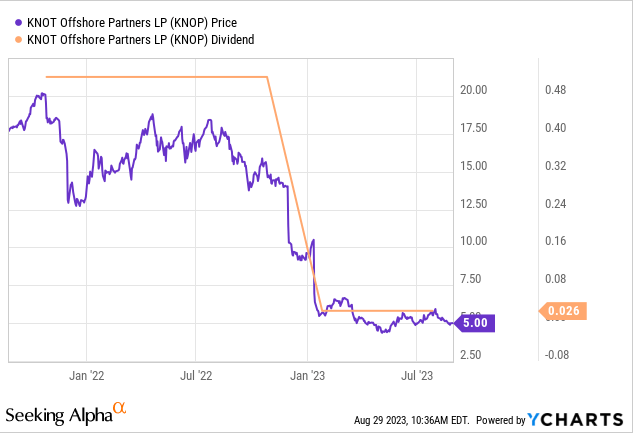
After the company cut the dividend in January 2023, the stock went down by 70%. The company revenues and profitability remain stable, and most of the concerns have been resolved. It is only a matter of one or two quarters when dividends would be resumed and the share price would re-rate.

Once dividends are reinstated, the share price should start regaining the previous trading levels, which means tripling the current share price.

Shuttle Tankers

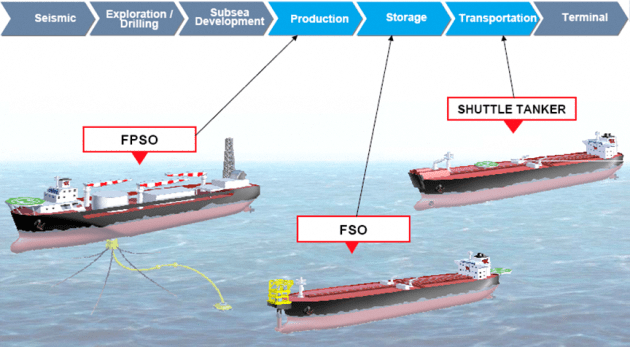
Shuttle tankers are specialized vessels used to transport crude oil from offshore oil fields to onshore facilities. There are only 78 shuttle tankers in the world serving the North Sea and the fields of offshore Brazil. They are designed to be able to work on high seas where conventional FPSOs cannot operate. The industry was pioneered by Knudsen, the parent company, in 1978.

Shuttle tankers transport oil from oil field to onshore facilities

shuttle tankers
http://www.e-marineeducation.com

The Shuttle Tanker Market is Very Tight 

There are only 78 shuttle tankers globally operated by three companies in two regions (Brazil and Norway). Only five new ships have been ordered while over 20 ships that are more than 20 years old should be scraped soon. As it takes three years for a ship to be delivered there is very good market visibility for the next at least five years. The market on the supply side is tight and with the scraping will get even tighter.

Demand for shuttle tankers is increasing. There is a rapid expansion in production in both the North Sea (the large Johan Castberg field, for example) and Brazil via Petrobras, and others will require additional shuttle tankers.

Higher production, new fields about to start producing, and limited supply or potential supply of vessels make for a nice bottleneck situation later in 2023 and in 2024 as producers scramble to secure the transport of their oil on shore.

In the 2Q23 the CEO of KNOP reported:

The market for shuttle tankers in Brazil, where fourteen of our vessels operate, has continued to tighten in the second quarter, driven by a significant pipeline of new production growth over the coming years, a limited newbuild order book, and typical long-term project viability requiring a Brent oil price of only $35 per barrel… the contract that we have signed for the Brasil Knutsen in August 2023 demonstrates that market tightening in Brazil is underway…

…Looking ahead, based on supply and demand factors with significant forward visibility and committed capital from industry participants, we believe that the overall medium and long-term outlook for the shuttle tanker market remains favorable. Notably, the current shuttle tanker orderbook consists of only five vessels, all of which are scheduled to deliver by 2025, while any future new orders would be expected to deliver in 2026 or thereafter.

Shuttle Tanker Rates Have Limited Downside and Substantial Upside

While shuttle tankers can perform the regular function of the regular oil tanker fleet (they are a bit slower because they are heavier), regular tankers cannot substitute shuttle tankers. In periods of lacking demand for shuttle tankers, these operate as regular oil tankers, which limits the downside. When demand is high, the rates increase materially. This is happening now in the Brazilian market, where KNOP operates 14 of its 18 vessels. The Norwegian market should tighten from early 2024 as the new fields come into production.

Why is KNOP 70% Down in The Last 12 Months

Since the 3rd Quarter of 2022, KNOP stock has been totally annihilated. Several reasons caused the share price fall:

  • Postponement of gigantic Equinor field due to Covid by over one year,
  • need to refinance 40% of its debt in the 1Q,
  • renewal of several charters creating uncertainty about 2023 and 2024 coverage, and
  • the departure of a long-term CEO

The above resulted in a dividend cut from $2.08/year to $0.11. Reaction to this was predictable. Dividend investors sold in droves for tax reasons, for the lack of visibility and income. Moreover, many MLP investors became concerned that the group would buy 70% of what they don’t own on the cheap, like many other MLP sponsors.

graph
YCharts

By 2Q23 the Issues Were Resolved

As of 2Q23 none of the adverse scenarios have materialized. Most concerns were resolved:

  • KNOP has renewed several of the charters that came due in 1H 2023,
  • KNOP successfully refinanced the debt at the same terms as they had before, and
  • a new CEO was named.

There are only two issues remaining for resolution, none of which is material:

  1. Two vessels in the North Sea (Hilda and Torill) are out of charter at the end of 2023. Based on my discussion with the management it does not matter. The company is trying to secure a new long-term charter and if that does not succeed the two vessels will operate as oil tankers at the spot market. Oil tanker rates are well above shuttle tanker rates at the moment. As the new oil fields will come into operation in 2024 these vessels are expected to be locked into long-term charters again.
  2. Two ships operating in the Brasil market (Dan Cisne and Dan Sabia) are smaller than would be ideal. Their charters are now scheduled to expire by the end of 2023. On the 2Q23 call, the CEO was confident that the issue would be resolved soon:

We remain in discussions with our customers and continue to evaluate all our options for the two Dan vessels, including but not limited to redeployment in the tightening Brazilian market, or a sale of the two vessels.

KNOP secured charter coverage for 2023, is negotiating to extend the two Petrobras tankers coming due, and is starting to explore long-term charters for the remaining assets. It also appears that the best opportunity to take the company under the sponsor has passed, at least at the low. As the dividend was decreased, the company used its cash to pay down debt. The issues have been resolved and the remaining are being addressed.

The company’s stable financial position is visible in its financials:

REVENUES
Seekingalpha.com
EBITDA
Seekingalpha.com

KNOP Should Start Rerating

The company position has normalized – KNOP is now in a similar state it was when it was paying above USD2 in dividends per year:

  • In 2Q23 the fleet operated with 99.3% utilization.
  • Its Revenues were the highest in the last 10 quarters, EBITDA and EBIT were in line with previous quarters.
  • Most of the charters have been secured

In the 2Q23 press release Gary Chapman, Chief Executive Officer and Chief Financial Officer of KNOT Offshore Partners LP, stated (emphasis added):

“We are pleased to report another strong performance in the second quarter of 2023, marked by over 99% fleet utilisation for scheduled operations and meaningful progress in filling the gaps in our charter portfolio. We have similarly made good progress in strengthening and de-risking our financial position, such that nearly all of our financing needs for 2023 have now been addressed…

Including those contracts signed since June 30, 2023, we now have 94% of our charters fixed for the remainder of 2023, providing us with good near-term visibility.

In Brazil, the main offshore oil market where we operate, the supply/demand balance is continuing to improve, with robust demand and increasing charter rates…

..As the largest owner and operator of shuttle tankers (together with our Sponsor, Knutsen NYK), we believe we are well positioned to benefit from such an improving charter market

Despite all this progress, the company has been left for dead. Trading at $5.5 per share it is remaining at a steep discount to the $15-20/share NAV of the ships and the $3-4/share of free cash flow generating capacity.

Resumption of Dividend Payment

So what should we expect in 2024? Given that the FCF/share should expand to over $3/share, there should be a resumption of dividends.

It is not possible to model such a scenario with sufficient accuracy but given the previous precedents, it is not hard to imagine a $2-3/share dividend in 2024 and beyond. Either way, the net present value of any of the outcomes is very attractive. At a little over $5 per share, we should be able to get all our investment back over the next 3 years or so, representing a very attractive IRR. Given how oversold the shares are, any incremental good news should help to rerate the stock higher.

Risk Factors

Since this is not a biotech stock or economically sensitive equity, there are exogenous factors that can affect the stock. Delays of the Equinor project, geopolitical conflict near the Norwegian waters, an accident, or a belated offer by the parent company to take the stock under may cause the stock to underperform my expectations. However, given that the stock is already trading well below steel, the risk-reward of investing in KNOP is very positive.

Conclusion

KNOP is down 70% due to multiple concerns that resulted in a dividend cut. Most of the concerns have been resolved and the financial performance remains stable. As the issues have been resolved, the dividends should be reinstated. Before the dividend cut, the stock was trading at a dividend yield of over 12%. At the current share price, the previous dividend would represent a dividend yield of 40%. The stock is up for a material rerating.

Disclosure: 

The goal of the blog is to provide investment ideas for further research. I/we have a beneficial position in the shares discussed above either through stock ownership, options, or other derivatives. I wrote this article myself, and it expresses my own opinions. I am not receiving compensation for it. I have no business relationship with any company whose stock is mentioned in this article. The article does not represent investment advice. Please do your own research before making any investment action.
Enter your email address to subscribe to this blog and receive notifications of new posts by email.

Norsk Titanium – Quotes From the Presentation Today

Norsk Titanium Reported today. The share price is down 40% today on delayed revenues and concerns about capital raisings. I summarize below the main points from the presentation.

Norsk Titanium summary

  • Pioneer in titanium parts printing.
  • Titanium printing consumes up to 80% less titanium in the production of parts for aviation and defense. Being first in the field is an opportunity and risks:
    • Aviation is a highly regulated industry – to break through the licensing takes a long time.
    • Once this is achieved the opportunity is very material – Norsk Titanium can disrupt traditional titanium producers.
  • Over USD400 million invested in technology
  • USD90 million market capitalization
  • No material debt
  • 170 patents
  • 100+ employees
  • 35 machines with 700 tons capacity
  • USD300 million annual revenue capacity
  • Revenue guidance for 2023 of USD7 million

Production update 1H23

  • 8 titanium parts in production for Airbus, ASML, and others (7 at 2022 year-end)
  • 20 titanium parts in preparation for production (9 at 2022 year-end)
  • Recurring revenue from parts in the pipeline – USD24 million (USD3m at 2022 year-end)

Airbus qualification and industrial trials

• Continued strong engagement in exploring new additional parts

• End-to-end qualification ongoing; awaiting Airbus approval

Qualification with US Department of Defence prime contractors and production order

• Added to Northrop Grumman’s approved special processor listings

• Completed part of transition change board with a DoD prime contractor; production in early 2024

• Completed initial development of a large part with General Atomics AS

ASML/Hittech demonstrator part and first production order

  • ASML is the world’s leading producer of machines for the production of chips
  • Commenced production of an initial 30 parts under a contract awarded in late 2022
  • Additional production orders anticipated in 2023
  • Experienced and resolved production transition issues

Partnership with ATI announced

  • ATI is a global producer of Titanium and other products with USD4 billion mkt cap
  • In essence, ATI is Norsk Titanium’s direct competitor
  • The CEO was vague on the scope of cooperation. He mentioned that it will relate to the development of new products.

Capital raising should be completed by the end of September.

The CEO said, that the presentation was reviewed by its major clients. The original presentation included much more information, but had to scale it down based on the client requests.

Link to the presentation

In summary, Norsk did not deliver today. The CEO seemed to be bullish. All is eminent. We will achieve the capital raise during September. We are in very active dialogue with Airbus. We have been very active dialogue with Boing during the last 30 days. If Norsk Titanium delivers the stock price should jump materially. High risk-return play.

Enter your email address to subscribe to this blog and receive notifications of new posts by email.

Disclosure: 

The goal of the blog is to provide investment ideas for further research. I/we have a beneficial position in the shares discussed above either through stock ownership, options, or other derivatives. I wrote this article myself, and it expresses my own opinions. I am not receiving compensation for it. I have no business relationship with any company whose stock is mentioned in this article. The article does not represent investment advice. Please do your own research before making any investment action.